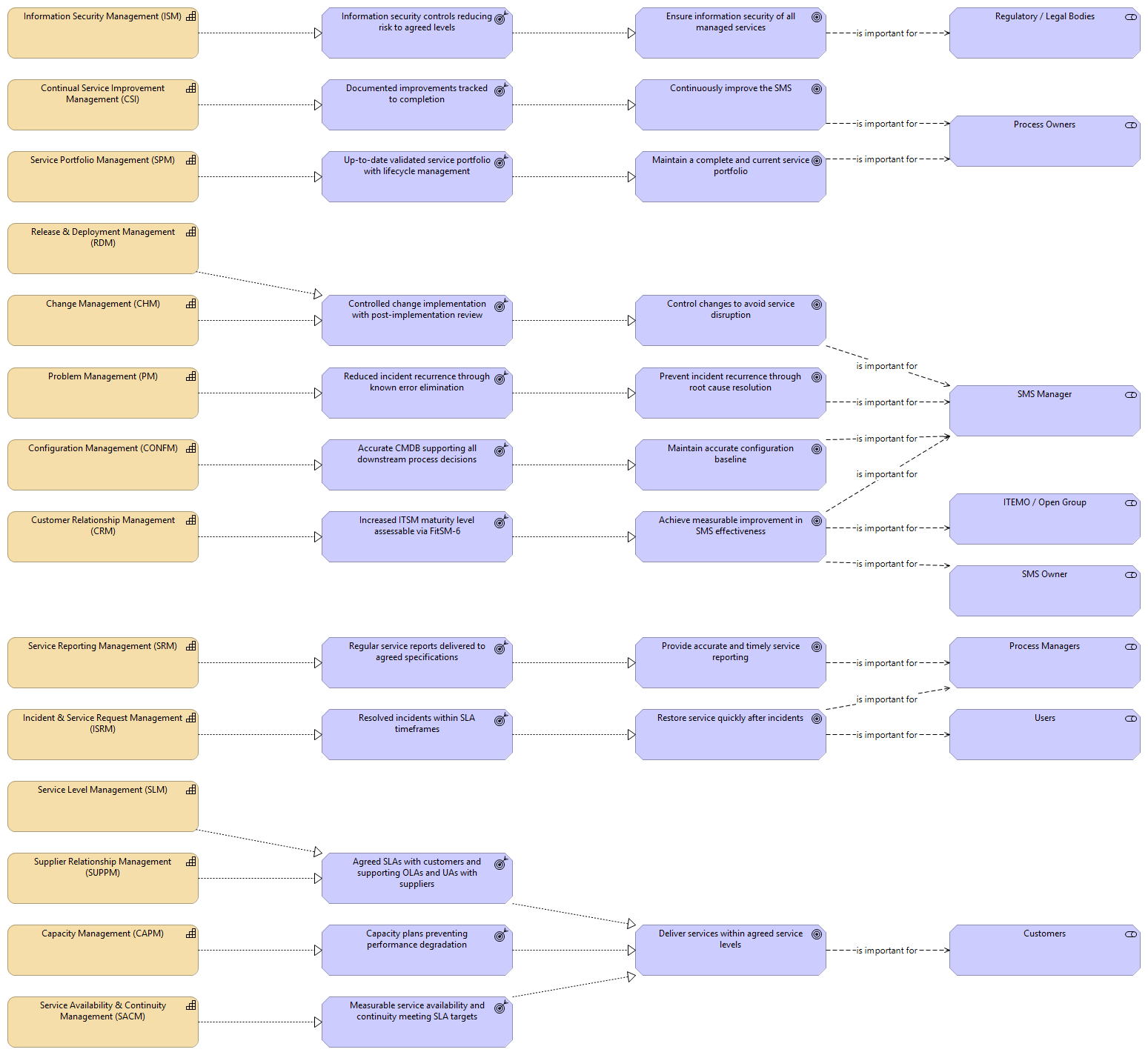
System Overview ()
System Overview
generated_by
generator_path
run_at
model_code
view_type
Service Level Management (SLM)
Service Reporting Management (SRM)
Controlled change implementation with post-implementation review
Regular service reports delivered to agreed specifications
Reduced incident recurrence through known error elimination
Capacity plans preventing performance degradation
Capacity Management (CAPM)
Users
Up-to-date validated service portfolio with lifecycle management
Prevent incident recurrence through root cause resolution
Service Availability & Continuity Management (SACM)
Resolved incidents within SLA timeframes
Customer Relationship Management (CRM)
Documented improvements tracked to completion
Continuously improve the SMS
Information Security Management (ISM)
Configuration Management (CONFM)
Restore service quickly after incidents
Problem Management (PM)
Incident & Service Request Management (ISRM)
Process Owners
Maintain a complete and current service portfolio
SMS Manager
Agreed SLAs with customers and supporting OLAs and UAs with suppliers
Customers
Deliver services within agreed service levels
Supplier Relationship Management (SUPPM)
Process Managers
Change Management (CHM)
Maintain accurate configuration baseline
Measurable service availability and continuity meeting SLA targets
Provide accurate and timely service reporting
Increased ITSM maturity level assessable via FitSM-6
Continual Service Improvement Management (CSI)
SMS Owner
Release & Deployment Management (RDM)
Accurate CMDB supporting all downstream process decisions
Service Portfolio Management (SPM)
ITEMO / Open Group
Regulatory / Legal Bodies
Achieve measurable improvement in SMS effectiveness
Control changes to avoid service disruption
Information security controls reducing risk to agreed levels
Ensure information security of all managed services
Service Level Management (SLM) Agreed SLAs with customers and supporting OLAs and UAs with suppliers
Service Reporting Management (SRM) Regular service reports delivered to agreed specifications
Controlled change implementation with post-implementation review Control changes to avoid service disruption
Regular service reports delivered to agreed specifications Provide accurate and timely service reporting
Reduced incident recurrence through known error elimination Prevent incident recurrence through root cause resolution
Capacity plans preventing performance degradation Deliver services within agreed service levels
Capacity Management (CAPM) Capacity plans preventing performance degradation
Up-to-date validated service portfolio with lifecycle management Maintain a complete and current service portfolio
is important for Prevent incident recurrence through root cause resolution SMS Manager
Service Availability & Continuity Management (SACM) Measurable service availability and continuity meeting SLA targets
Resolved incidents within SLA timeframes Restore service quickly after incidents
Customer Relationship Management (CRM) Increased ITSM maturity level assessable via FitSM-6
Documented improvements tracked to completion Continuously improve the SMS
is important for Continuously improve the SMS Process Owners
Information Security Management (ISM) Information security controls reducing risk to agreed levels
Configuration Management (CONFM) Accurate CMDB supporting all downstream process decisions
is important for Restore service quickly after incidents Process Managers
is important for Restore service quickly after incidents Users
Problem Management (PM) Reduced incident recurrence through known error elimination
Incident & Service Request Management (ISRM) Resolved incidents within SLA timeframes
is important for Maintain a complete and current service portfolio Process Owners
Agreed SLAs with customers and supporting OLAs and UAs with suppliers Deliver services within agreed service levels
is important for Deliver services within agreed service levels Customers
Supplier Relationship Management (SUPPM) Agreed SLAs with customers and supporting OLAs and UAs with suppliers
Change Management (CHM) Controlled change implementation with post-implementation review
is important for Maintain accurate configuration baseline SMS Manager
Measurable service availability and continuity meeting SLA targets Deliver services within agreed service levels
is important for Provide accurate and timely service reporting Process Managers
Increased ITSM maturity level assessable via FitSM-6 Achieve measurable improvement in SMS effectiveness
Continual Service Improvement Management (CSI) Documented improvements tracked to completion
Release & Deployment Management (RDM) Controlled change implementation with post-implementation review
Accurate CMDB supporting all downstream process decisions Maintain accurate configuration baseline
Service Portfolio Management (SPM) Up-to-date validated service portfolio with lifecycle management
is important for Achieve measurable improvement in SMS effectiveness SMS Owner
is important for Achieve measurable improvement in SMS effectiveness SMS Manager
is important for Achieve measurable improvement in SMS effectiveness ITEMO / Open Group
is important for Control changes to avoid service disruption SMS Manager
Information security controls reducing risk to agreed levels Ensure information security of all managed services
is important for Ensure information security of all managed services Regulatory / Legal Bodies